B2B AI Does Not Have a Pricing Problem. It Has a Revenue-System Problem
 Julia
Julia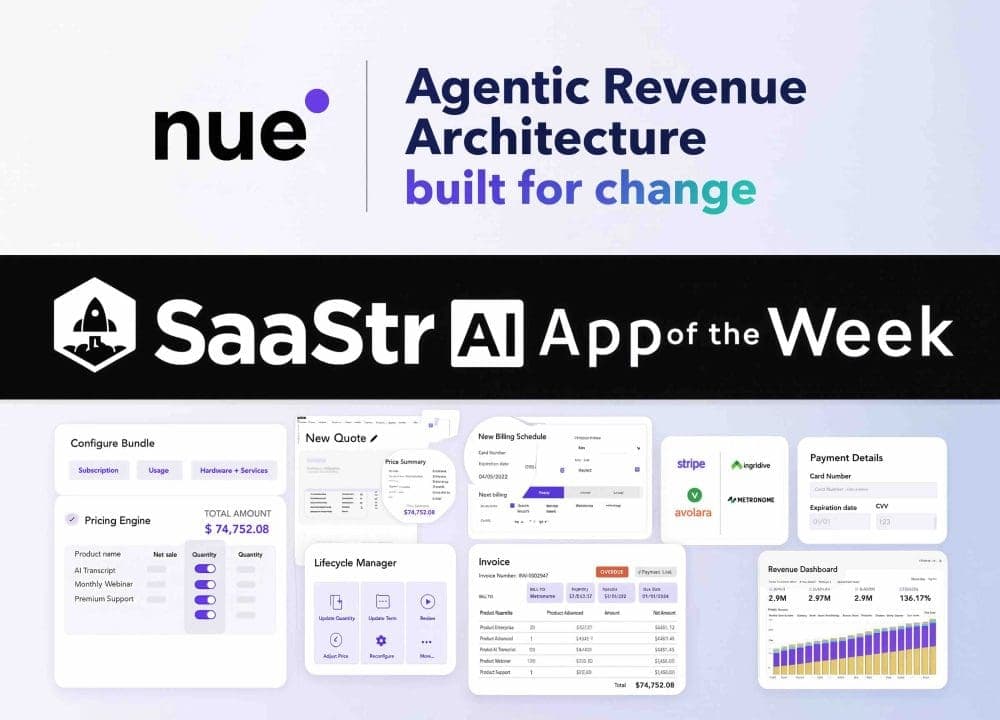
Across the companies we study, one pattern has become impossible to ignore: B2B AI teams can change their product faster than they can change the way they sell it. A team can move from a seat-based offer to consumption, credits, committed spend, or an outcome-led package in a product meeting. Then the idea collides with the quote-to-revenue stack, and the commercial shift that felt obvious becomes a multi-quarter systems project.
That gap matters because AI has made pricing part of the product strategy again. An AI SDR, for example, does not fit comfortably inside the old software reflex of charging every customer a fixed amount per named user. Some buyers will want a subscription. Some will want usage. Some will want credits. Some will want a commercial structure tied to a defined result. A company that cannot support those conversations operationally is not merely limited by finance tooling. It is limited in what it can credibly promise the market.
Our position is direct: B2B AI companies should stop treating pricing infrastructure as back-office plumbing. It is a growth system. It determines whether a company can test new routes to market, turn product value into a commercial model, support multiple channels, and build buyer confidence while AI capabilities change at speed.
Get practical tips to manage marketing without adding noise.
Short field notes on positioning, distribution and turning expertise into demand. Written for founders and operators, not marketers chasing trends.
Pricing flexibility is now a go-to-market capability
The business case for flexible monetization is not that every company needs a complicated pricing page. Most do not. The case is that a company needs the ability to evolve without rebuilding its commercial operations every time the market teaches it something new.
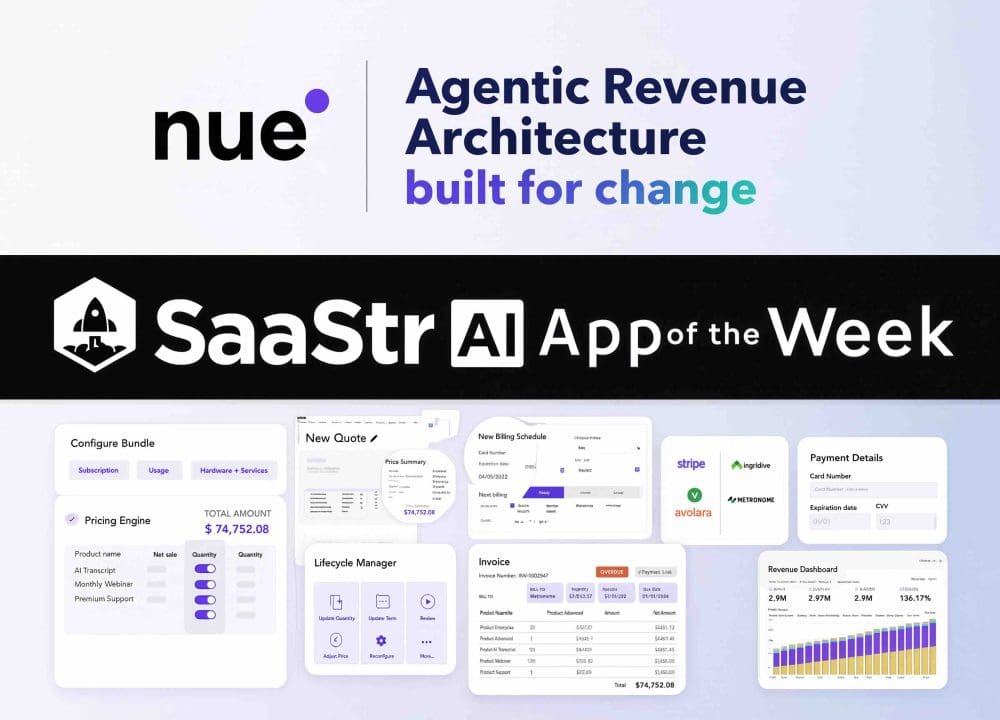
Nue is built around that problem. Its platform combines Salesforce-native CPQ, revenue lifecycle management, billing, usage metering, credits, collections, and analytics in one environment. It is designed to support subscriptions, usage, committed spend, credits, one-time fees, and hybrid pricing models without forcing data to be translated between disconnected systems.
That is the right premise for B2B AI. The important issue is not whether a company can publish a usage-based price. Almost any company can do that. The real issue is whether sales can quote it, whether the business can meter it, whether finance can recognize and manage it, whether amendments can be processed, and whether the underlying customer record remains coherent when the commercial model changes midstream.
- A price page is messaging. It tells the market what a company wants to charge.
- A pricing model is an operating system. It determines how a company sells, bills, measures, manages, and reports revenue.
- Pricing infrastructure is strategic leverage. It determines how quickly a company can learn which model the market will actually buy.
- Commercial agility protects distribution. A company that can serve direct, self-serve, partner, and embedded channels from one data model is less exposed to a single route to market.
The per-seat default is becoming a commercial constraint
Per-seat pricing is not obsolete. It remains useful when the value of a product is closely connected to a known group of users and a predictable software workflow. The mistake is treating it as the natural endpoint for every B2B AI business simply because it was the default model for SaaS.
AI changes the relationship between software, labor, and value. In many AI-native GTM models, the customer is not only buying access to a dashboard or a user license. They are buying activity, capacity, processed volume, credits, automated work, or a defined commercial outcome. A company that sells AI SDRs, for example, may need the flexibility to combine a recurring platform fee with credits, usage, committed spend, or another model that fits how the customer wants to buy.
The answer is not to declare that every AI business should charge for outcomes. That would be another lazy template. Outcome-based pricing can be attractive, but it also requires the company to define what is being sold clearly enough for its commercial operations to support it. The bigger point is that companies need room to learn. They need to move from per-seat to consumption, from consumption to credits, or from a subscription to a hybrid structure without turning each iteration into a systems migration.
That is why the old division between product strategy and revenue operations is breaking down. If the product team can ship a new capability in weeks but the company cannot package, quote, meter, bill, and recognize it for months, the revenue system has become the company’s actual speed limit.
The bottleneck is not the pricing idea. It is the quote-to-revenue chain.
Too much AI pricing discussion is trapped at the surface. Founders debate whether a model should be usage-based, credit-based, or seat-based as though the choice ends when someone updates a pricing table. It does not. The commercial model has to survive contact with the full quote-to-revenue chain.
A new model affects the sales quote. It affects the pricing rules inside the CRM. It affects usage metering. It affects billing. It affects credits and committed spend. It affects mid-term changes, upsells, amendments, and early renewals. It affects collections, reporting, and revenue recognition. When these functions live in disconnected systems, a pricing change becomes an exercise in data translation and operational negotiation.
That is exactly the kind of friction that makes companies retreat to familiar pricing even when it no longer reflects how customers receive value. The organization does not choose per-seat pricing because it is strategically superior. It chooses per-seat pricing because the existing machinery can tolerate it.
That is not strategy. It is inherited infrastructure making strategy on the company’s behalf.
Nue’s argument is more consequential than “we support flexible pricing.” The company is making the case for a unified data model across CPQ, billing, metering, revenue operations, and finance operations. Its Salesforce-native CPQ approach places the pricing engine inside Salesforce, the system of record, rather than treating it as a disconnected overlay. That matters because a pricing model only becomes a real operating model when the commercial data stays consistent from quote through revenue.
A market point of view matters more than a product roadmap
There is a second issue here that B2B AI companies cannot afford to miss. Buyers are being asked to make decisions while the AI market is moving quickly, product roadmaps are changing, and every vendor claims that more automation is coming soon. In that environment, a product vision alone is not enough.
A product vision says what a company intends to build. A market-centered point of view explains why the buyer’s current way of operating is becoming inadequate and what a better commercial future should look like. Those are not the same thing.
For an AI company, the credible point of view is not simply that its model is more capable. Models will keep changing. The stronger position is that the company understands how AI changes the buyer’s economics, workflow, risk, procurement process, and revenue model. Pricing is where that understanding becomes tangible.
When a vendor can say, with operational credibility, that it can support subscriptions, usage, credits, commitments, one-time fees, and hybrid models across direct, self-serve, partner, and embedded channels, it is not just describing billing functionality. It is telling cautious buyers that the vendor has thought through how the product will be bought and managed as requirements change.
That confidence is an authority asset. It reduces the gap between a bold roadmap and a buyer’s willingness to sign today. In B2B, especially amid AI uncertainty, the company that makes its commercial model legible earns more trust than the company that simply promises future intelligence.
One data model is less glamorous than AI, and more important than most teams admit
“Unified platform” language is easy to dismiss because every software category has learned to use it. But in quote-to-revenue, the underlying architecture is not a cosmetic distinction. It determines whether the company can operate a pricing change cleanly.
A unified system that connects Salesforce-native CPQ, revenue lifecycle management, billing, usage metering, credits, collections, and analytics gives a company a different starting point. The pricing logic and the customer record are not forced to travel through a series of disconnected layers before they reach finance or reporting. A company can configure commercial models across the lifecycle rather than treating every new offer as an exception that requires manual intervention.
That is particularly relevant when customers change course during a contract. B2B AI products are still finding their durable packaging. A customer may increase usage, buy more credits, move into a commitment, add a one-time component, accept an amendment, or renew early. The operating system needs to handle those changes as normal commercial events, not as disruptions that force sales, finance, and RevOps into a manual reconciliation exercise.
Systems outperform heroic effort here. A company can survive a handful of custom deals through spreadsheets, Slack messages, and determined operators. It cannot build a durable growth engine that way. Manual work may close revenue in the short term, but it obscures the business model, slows iteration, and turns every successful exception into another operational liability.
The strongest counterargument is simplicity. The answer is optionality.
The strongest objection to this entire approach is reasonable: early-stage companies should avoid complicated pricing. They should sell something understandable, standardize their offer, and resist the temptation to create bespoke monetization for every prospect.
We agree with the discipline and reject the conclusion. Simplicity for the buyer is essential. Rigidity inside the revenue system is not.
A company should be able to present a clear offer while retaining the ability to support the commercial structure that the market demands. It should not confuse an understandable buying experience with an inflexible back end. The best systems let a company keep the front door simple while preserving the ability to evolve behind it.
That is especially important for companies building distribution beyond one sales motion. Direct enterprise sales, self-serve acquisition, partnerships, and embedded distribution place different demands on pricing and revenue operations. Single-channel growth is fragile. A revenue platform that can support multiple channels within one data model gives the company more freedom to pursue distribution wherever the market is most receptive.
What operators should change now
The practical shift is to treat monetization as a design problem across product, sales, RevOps, and finance from the beginning. Not because every company needs complexity, but because every company needs the ability to discover the model that customers will support.
- Separate the customer-facing offer from the underlying commercial capability. Keep buying simple, but ensure the system can support subscriptions, usage, credits, commitments, and hybrid structures when the business needs them.
- Assess every pricing idea through the entire revenue lifecycle. A model is not ready because it looks good in a deck. It is ready when it can be quoted, metered, billed, amended, collected, reported, and recognized.
- Keep pricing logic close to the customer system of record. Salesforce-native CPQ matters because commercial decisions need to remain connected to the records and workflows that govern the customer relationship.
- Build for more than one channel. A pricing architecture that supports direct, self-serve, partner, and embedded motions gives a company more distribution options without creating separate commercial realities.
The companies that win the next phase of B2B AI will not simply be those that ship more intelligence. They will be the companies that make that intelligence easy to buy, easy to expand, and operationally credible. Discovery is a business function, but so is monetization. A customer cannot discover value if the vendor cannot package that value in a form the customer can understand and purchase.
TL;DR
B2B AI companies do not need more fashionable pricing theories. They need revenue systems that let them test and operate the models their market demands. Per-seat, consumption, credits, commitments, one-time fees, and outcome-led structures are not just pricing-page choices. They are quote-to-revenue decisions.
Nue’s Salesforce-native, unified approach matters because it treats pricing as infrastructure: connected to CPQ, billing, metering, revenue lifecycle management, collections, and analytics rather than scattered across disconnected tools. That is the right direction. In AI, commercial flexibility is no longer a finance convenience. It is a competitive advantage, a distribution capability, and a signal to buyers that a company is built to sell the future it claims to see.
Find the channels buyers already trust before competitors own them.
We map your acquisition channels, visibility gaps and distribution constraints, then show where market presence can compound into qualified demand.