10 years of SEO. Matched in 4 months.
We launched a brand-new domain into a niche held by a 10-year-old established site. Four months later — 100% content from our autonomous content engine, zero backlink building, zero paid traffic — the fresh domain has overtaken it on impressions and sits at 94% of its clicks. Side-by-side Search Console proof below.
Proof scope: this study documents the search and AI-discovery layer of Codolie’s wider distribution system. It does not claim that search alone is a complete go-to-market strategy.
One niche. Two operating models.
Same market, same language, same search environment. This is a direct operating benchmark, not a controlled laboratory experiment: two different approaches to building discovery, shown side by side.
- 10-year-old established domain in the niche
- A decade of accumulated authority and backlinks
- Recently rebuilt on a modern stack
- Traditional editorial content
- Brand-new domain, launched March 2026
- 100% content from our autonomous content engine
- Zero backlink building, zero paid traffic
- Technical SEO and schema from day one
The full picture — including where we still trail.
| Metric | Established domain10 years old | Fresh domain4 months old |
|---|---|---|
| Clicks | 3.56K | 3.35K94% — trend climbing |
| Impressions | 87.6K | 113Kovertaken |
| Avg. CTR | 4.1% | 3%incumbent leads |
| Avg. position | 8.4 | 9.3incumbent leads |
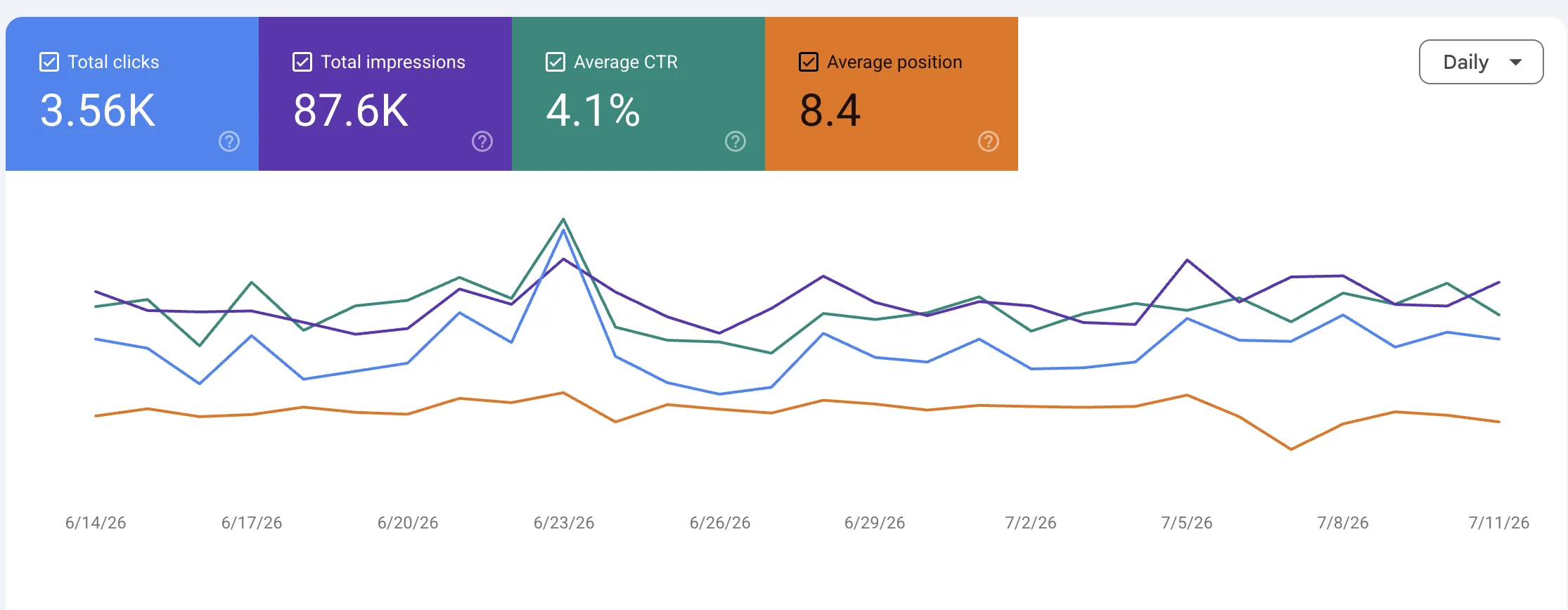
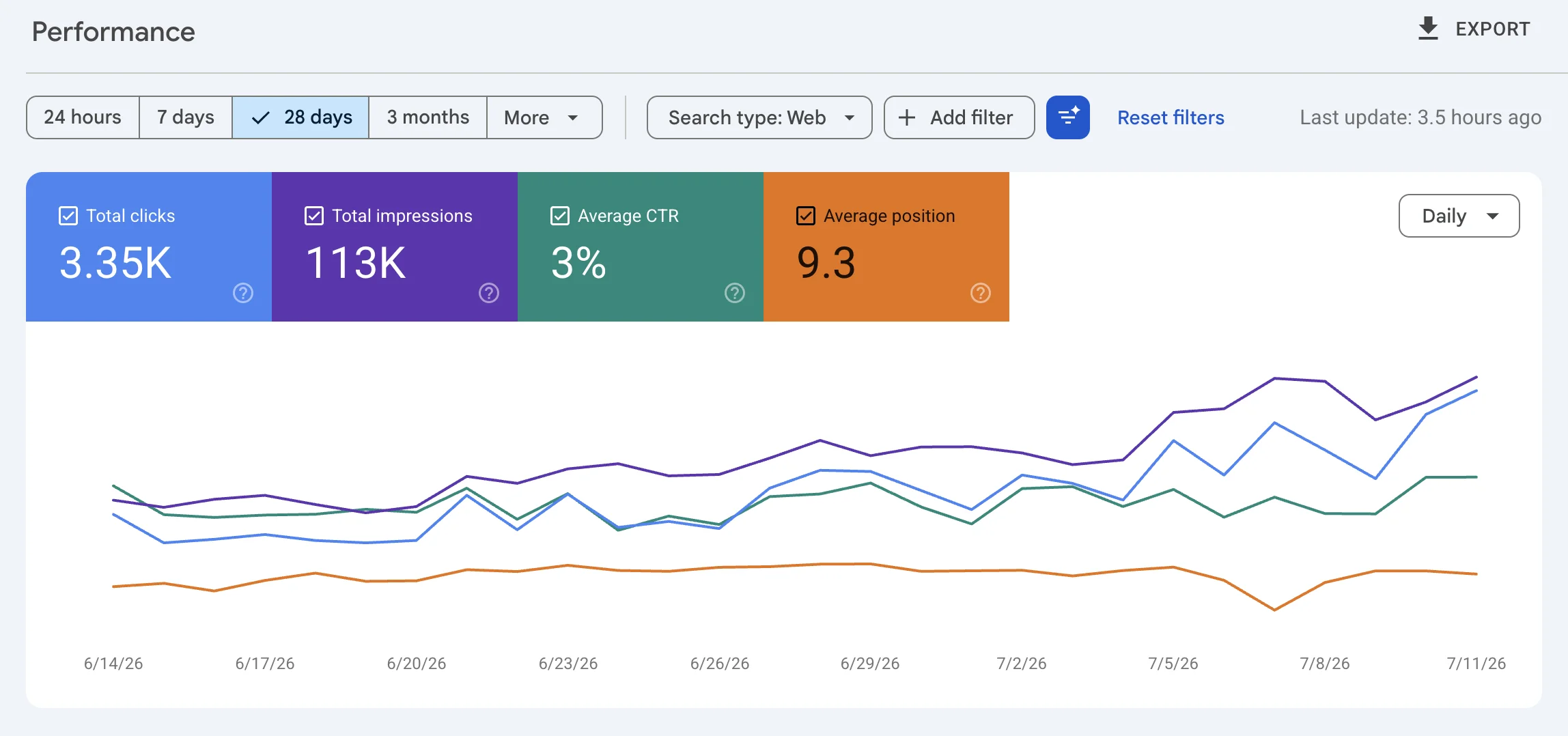
Source: Google Search Console, last 28 days, July 2026. Screenshots cropped to remove identifying details.
Discovery can start before authority arrives.
A new app, SaaS product or offer does not need to wait years before buyers can find it. With the right technical foundation and enough useful coverage, a fresh domain can earn meaningful discovery while the wider launch campaign builds social proof, category recall and conversations around it.
That is how Codolie uses this layer: not as “more blog content,” but as durable demand infrastructure inside a broader distribution plan.
Google is one discovery surface. Bing and AI widen the route.
Bing’s index feeds Microsoft Copilot and contributes to AI-era discovery. The engine’s sites consistently over-index on Bing, giving the content another durable route beyond Google while dedicated citation tracking shows how often the wider corpus surfaces in AI answers.
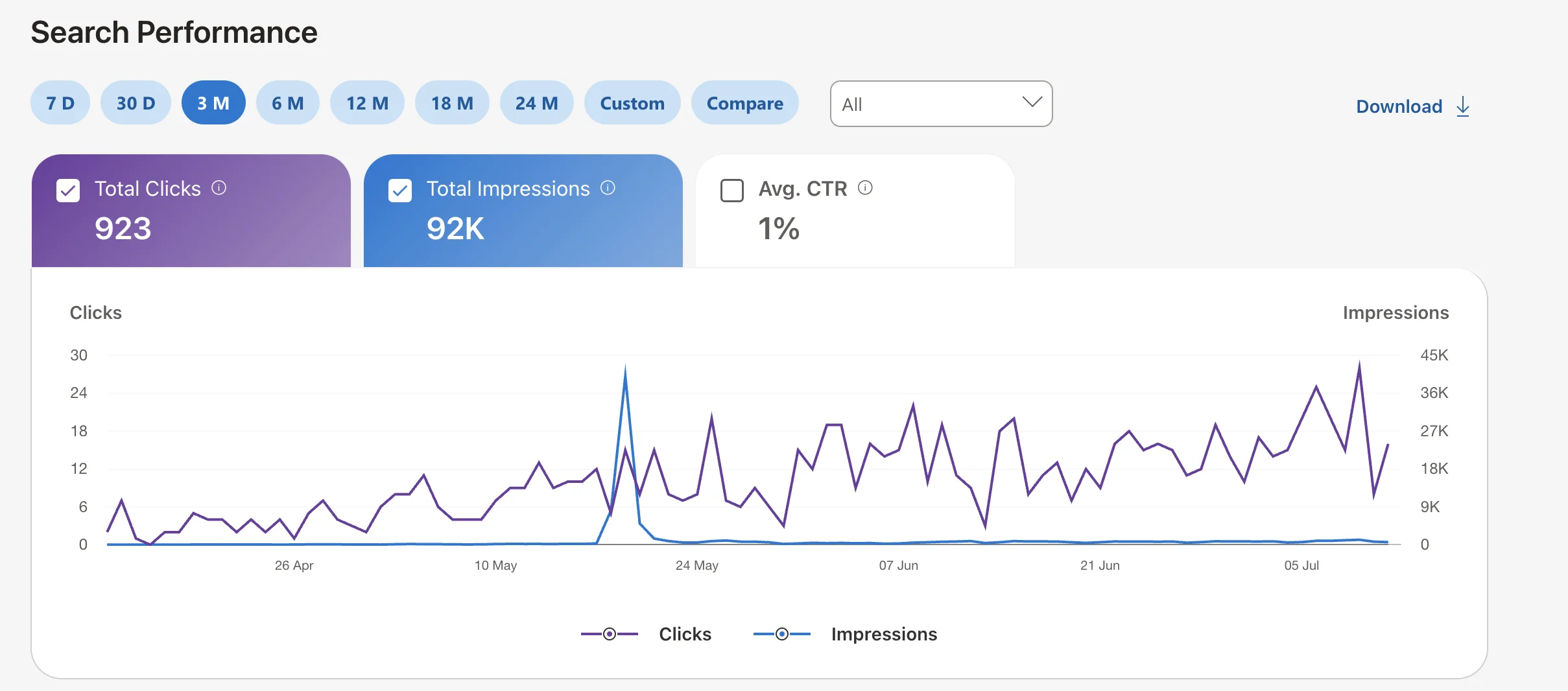
Inside the engine. No magic.
This is what actually runs, week after week. Nobody pastes prompts into a chatbot and nobody manages a content calendar — five stages, fully autonomous, with your approval as the only human step.
- 01
Detect
The engine watches the sector continuously — feeds, channels, search APIs and an indexed corpus — and surfaces the topics buyers are about to search, before they’re saturated. That’s where the impressions lead comes from: coverage of long-tail intent the incumbent never got around to.
- 02
Qualify
Every candidate topic is checked against the brand, the language, current priorities and everything already published. Most topics are refused. Selection is the real product — a weak angle never reaches the writing stage, so volume never turns into filler.
- 03
Research & write
The engine cross-references sources, enriches the draft from a knowledge graph built out of everything it has already processed, and writes a structured article in the brand’s defined voice — internal links and schema in place from the first draft, not bolted on afterwards.
- 04
Gate
Drafts run through internal quality thresholds before anything ships. Rejection is part of the system: output that reads generic, duplicates an existing angle or misses the brief gets killed, not published. This is the difference between an engine and a prompt.
- 05
Publish & compound
Approved work ships with taxonomy, imagery, metadata and IndexNow submission — on fast pages, from day one. Then it feeds back into editorial memory, so every next article starts from more context than the last. That’s the curve you saw in the charts above.
Zero bought links · zero PBNs · nothing a core update can claw back
The honest caveats.
The incumbent still wins on CTR (4.1% vs 3%) and average position (8.4 vs 9.3). That’s expected: a 10-year-old brand gets branded searches — people looking for it by name — which a four-month-old domain simply doesn’t have yet. Those queries click at very high rates and pull both averages up. As the fresh domain’s recall builds, that gap closes.
And this is one head-to-head in one niche — we won’t pretend a single comparison proves everything. But it isn’t the engine’s only data point: another property running the same pipeline has 10,000+ published articles and has survived every Google core update.
We build the route around your growth moment — then operate it.
Search and AI discovery are one layer. Depending on the constraint, we combine them with positioning, launch strategy, founder and company social, short-form video and an always-on publishing operation. We take on a limited number of clients so the system is operated properly, not merely installed.
Asked by every SEO-literate buyer.
Will Google penalize AI content?
Google’s own guidance targets low-quality content, not how it’s produced. This engine uses zero tricks — no bought links, no doorway pages, no spun text. Another property running the same pipeline has 10,000+ published articles and has survived every Google core update.
How fast until results?
Impressions typically show within weeks — that’s Google discovering and testing the coverage. Clicks compound over months as pages age and rankings settle. This case study reflects four months from a completely fresh domain; an existing domain starts further up the curve.
What niches does this work in?
Anywhere buyers research before they buy — travel, gaming, professional services, consumer products and more. The engine already runs across multiple verticals and languages. The honest caveat: this head-to-head is one niche; we scope your niche’s search landscape before committing.
What do you need from me?
Your positioning, your niche, and approval checkpoints. The engine handles research, writing, linking, technical setup and publishing. Your involvement is direction and review — not production.
How is this different from hiring writers or using ChatGPT?
Writers scale linearly with cost and coordination. ChatGPT turns a prompt into text — it doesn’t detect topics, keep editorial memory, build internal links, or publish as a system. The pipeline does all of that autonomously, and it refuses weak topics rather than shipping filler.
Want the same curve on your domain?
Map your distribution plan