Bing Went From 101 to ~3,500 Monthly Clicks on Our Site. Stop Ignoring the Second Channel.
 Julia
Julia
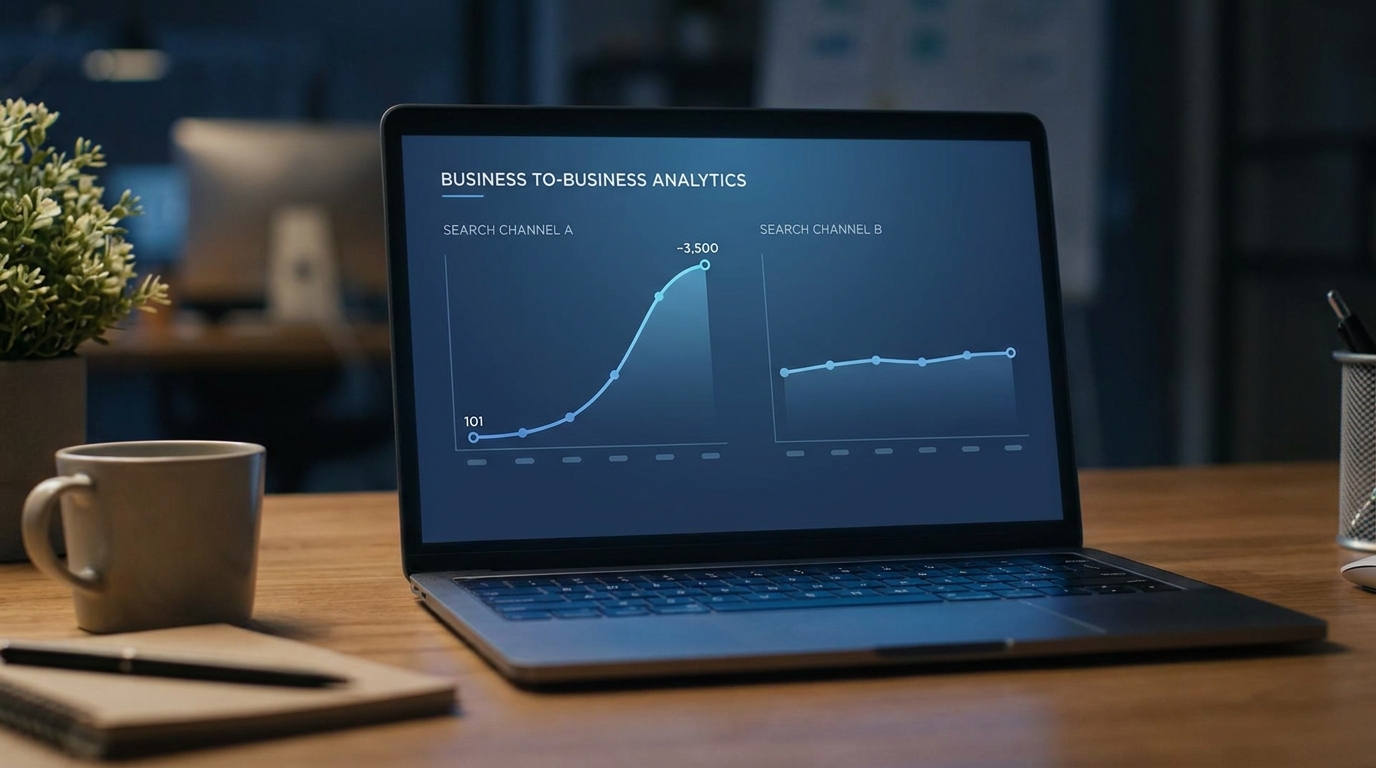
Our stake in this is practical, not theoretical. FinalBoss is one of our portfolio properties, which means the result lands directly on our own distribution system: Bing organic traffic grew from 101 monthly clicks to roughly 3,500. That is a 35x increase on a channel most B2B teams still treat as an afterthought.
The lazy response is to call that a nice extra. It is not. It is a warning about how fragile single-channel growth has become.
Too many companies have built their entire discovery strategy around one assumption: if Google is handled, search is handled. That assumption was already narrow. AI Overviews, zero-click search, AI Mode, declining organic click-through, and a more expensive attention market have turned it into a business risk.
Get practical tips to manage marketing without adding noise.
Short field notes on positioning, distribution and turning expertise into demand. Written for founders and operators, not marketers chasing trends.
Google still matters enormously. But Google cannot be the whole plan, especially for a B2B company trying to reach buyers, build authority, and create durable demand. A company that relies on a single discovery engine does not have a growth system. It has a dependency.
Bing is not a side project. It is the cheapest diversification B2B teams keep skipping.
The FinalBoss result changed how we think about Bing. Not because Bing suddenly replaces Google. It does not. The point is more important than that: a neglected discovery surface can produce material growth when competitors are all fighting for the same Google rankings, the same paid inventory, and the same shrinking pool of clicks.
That is the opportunity. Most SEO programs are built around Google’s rules, Google’s reporting, and Google’s definitions of success. As a result, Bing sits in a low-competition corridor. Many companies publish useful B2B content, optimize it for Google, and leave obvious Bing gains on the table simply because no one has made Bing a real operating priority.
On FinalBoss, that neglect created room. We went from 101 to roughly 3,500 monthly Bing clicks. The 35x increase is not an argument for chasing a vanity metric. It is an argument for recognizing that distribution opportunities are often hiding inside channels everyone has collectively decided are too small to deserve attention.
That is how operators get trapped. They look only at the channel with the biggest headline volume, then compete where competition is most intense. They ignore the smaller channel where their content can earn visibility faster, develop non-branded discovery, and reach a different slice of the buying market.
Key takeaways
- Bing grew from 101 to roughly 3,500 monthly clicks on FinalBoss, a 35x increase that turned a neglected search engine into a meaningful discovery channel.
- B2B companies should build a three-channel discovery mix rather than treating Google as the entire acquisition strategy.
- Bing’s different ranking priorities create a lower-competition route for content that is already being produced for Google.
- In an AI Overview and zero-click environment, clicks alone are no longer enough. Visibility, retrieval, branded demand, engagement, and conversions matter more.
The Google-only strategy is breaking for reasons that have nothing to do with your content quality
There is a habit inside marketing teams that needs to die: interpreting flat traffic as proof that content is weak.
Traffic can be flat because the work is weak. It can also be flat because the search environment now answers more queries before a click happens. Those are radically different diagnoses, and treating them as the same leads companies to make bad decisions.
In the first four months of 2026, 68% of U.S. Google searches ended without a click, up from 60% in 2024. That is not a minor product adjustment. It is a structural change in the economics of discovery.
When an AI Overview appears, people click a result about 8% of the time, compared with 15% when no overview is displayed. Only 1% click a link inside the Overview itself. The top traditional result also takes a hit: an early estimate that AI Overviews reduced its click-through rate by 34.5% was later revised to a 58% forecast.
None of that means search is dead. It means the old measurement model is dead. Search visibility still affects who gets discovered, remembered, trusted, and approached later. But a business that evaluates its content only through direct Google clicks is using a dashboard built for a market that is disappearing underneath it.
Google also does not clearly separate AI-surface clicks from traditional-result clicks in a way that gives operators a clean view of what is happening. That makes a Google-only reporting model even weaker. If you cannot fully see how one increasingly important search surface is distributing attention, it is reckless to concentrate all discovery effort there.
This is why Bing matters now. Not because it is fashionable. Not because every company should pivot away from Google. Bing matters because resilience is valuable, and a second organic discovery channel is one of the least expensive ways to build it.
Why Bing can move faster than Google
Bing is not Google with a smaller logo. It evaluates websites differently enough that companies can see a meaningful gap between their Google performance and their Bing performance.
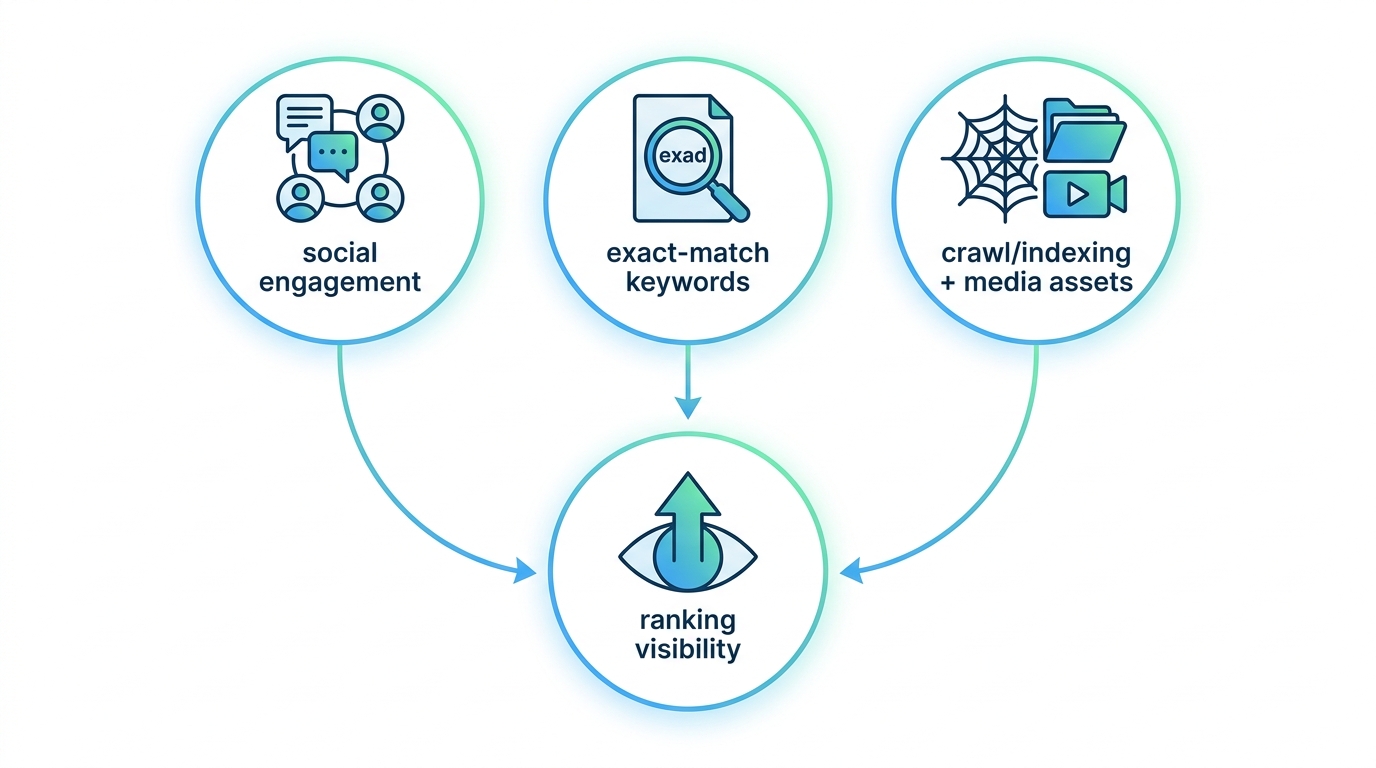
Its approach puts more weight on signals many Google-first SEO programs underuse: social activity as an indicator of trust and reputation, exact-match keyword relevance, and domain age. The result is not a loophole. It is a different set of incentives.
For B2B companies, that matters because a serious publishing operation should already be doing much of the underlying work: developing specific topical language, building a credible body of content, earning distribution through social channels, and making expertise easy to identify.
The mistake is assuming that publishing is the work. Publishing is the input. Distribution is the work.
A company writes one useful article, posts it once, waits for Google, and calls that content marketing. That is not a system. That is a hope-based workflow. The companies that win build content so it can be discovered repeatedly across search engines, social platforms, video, newsletters, direct visits, and increasingly answer engines.
Bing rewards the company that treats content as a distributed asset rather than a blog post with a publication date. That is one reason the channel is especially useful for B2B: buyers are not always conducting a broad consumer-style search on a phone. Desktop search remains a meaningful environment for professional research, vendor discovery, and problem evaluation.
The Google-only team sees one search engine. The operator sees a portfolio of discovery surfaces, each with different competition, buyer behavior, measurement limits, and compounding potential.
The real answer is a three-channel discovery mix
We would not advise replacing Google dependence with Bing dependence. That would simply recreate the same mistake on a smaller platform.
The better model is a three-channel discovery mix: Google, Bing, and an audience-building channel where your company can earn repeated attention rather than rent every visit from a search result.
For many B2B businesses, that third channel will be LinkedIn. For others, it may be YouTube, a newsletter, Reddit, or a founder-led distribution engine. The exact channel varies. The principle does not: discovery should come from more than one place, and at least one of those places should move the company closer to audience ownership.
- Google remains the largest search opportunity and a major authority surface, even as AI Overviews reshape click behavior.
- Bing offers a lower-competition organic route, particularly when your competitors have treated it as irrelevant.
- An owned or repeatable distribution channel turns visibility into a relationship instead of a one-time visit.
This is not channel diversification for its own sake. It is a way to reduce exposure to one platform’s product decisions. A company that has Google rankings, Bing visibility, LinkedIn reach, and a direct audience is harder to disrupt than a company that gets 90% of its non-paid discovery from a single search engine.
That matters even more as paid media gets harder. AI has made it cheaper to generate creative assets. It has not created more buyer attention. B2B teams can now produce more ads, more landing-page variants, and more campaign concepts than ever. The constraint is not production volume. The constraint is access to qualified attention.
When attention is limited, creative volume is not a moat. Better targeting, persona-specific channel choices, and serious measurement become the advantage. Incrementality and holdout thinking matter more than endlessly rearranging attribution models. And organic discovery matters because it creates another path into the market that does not depend on winning every auction.
Bing visibility is also part of the answer-engine problem
AI answers have made one thing clear: being useful is no longer enough. Your company also needs to be retrievable.
That means building pages that state a clear point of view, answer specific questions, use language buyers actually use, and demonstrate enough authority that platforms have reason to surface them. The game is no longer just “rank number one and get the click.” It is “be present where the market forms an answer.”
Bing gives companies another observable route to that presence. It expands the set of places where your expertise can be indexed, discovered, and measured. That is useful in a market where answer engines reshape how people reach conclusions before they ever visit a website.
What should not happen is the usual AI-era mythology. No one should promise that an SEO signal becomes a permanent fingerprint inside every AI system, or claim that optimizing for Bing guarantees inclusion in any given AI-generated answer. That is not a credible operating model.
The practical model is simpler: create authoritative material, distribute it where buyers and retrieval systems can encounter it, measure visibility where measurement exists, and connect that visibility to downstream demand. Bing is valuable because it broadens that system. It is not valuable because it is a magic shortcut.

What we would do differently if we were starting a B2B discovery system today
We would stop organizing search around a single dashboard and start organizing it around market presence.
- Track Google and Bing separately. Do not collapse them into one organic-search line item and lose the channel-level learning.
- Build pages around specific buyer problems and exact language, not broad “thought leadership” themes that say nothing distinctive.
- Distribute every serious piece through a repeatable social or owned channel, rather than assuming publication itself is distribution.
- Measure branded and directed demand alongside traffic, especially when AI Overviews reduce direct clicks.
- Track on-page engagement and conversions so the business can distinguish reduced click volume from reduced content value.
- Review where the company appears in AI surfaces and retrieval contexts, without pretending that every answer engine provides perfect measurement.
- Treat Bing growth as a strategic signal: it can reveal non-branded demand and content-market fit before Google authority fully catches up.
This is the operator’s version of SEO. It is less obsessed with a single ranking report and more focused on whether the company is becoming easier to find, easier to trust, and harder to ignore.
Authority is not a decorative layer on top of demand generation. Authority is an asset that lowers the friction of discovery across every channel. When a buyer encounters your company in Google, Bing, LinkedIn, YouTube, or an AI-generated answer, prior visibility changes the outcome. Familiarity changes the click decision. Credibility changes the conversion decision.
The companies that ignore Bing are not being strategic. They are being habitual.
There is no prize for concentrating every discovery bet on the channel everyone else already optimizes for. There is only more competition, more exposure to platform changes, and less clarity when the click pool shrinks.
FinalBoss going from 101 to roughly 3,500 monthly Bing clicks is not a promise that every B2B company will reproduce a 35x outcome. It is evidence that the second channel can become far more meaningful than conventional wisdom allows.
The bigger lesson is that modern visibility compounds when it is designed as a system. Google can create reach. Bing can create additional non-branded discovery. LinkedIn, YouTube, newsletters, and other repeatable channels can turn one-time attention into familiarity. Together, they create a company that is discoverable from multiple directions.
That is the standard B2B leaders should hold their growth model to. Not whether the company has published enough content. Not whether a single channel has a good month. Whether the business can still be found if one platform changes the rules.
TL;DR
Bing grew from 101 to roughly 3,500 monthly clicks on FinalBoss, our portfolio property. The 35x increase matters because it exposes a costly B2B habit: treating Google as the only search channel worth operating.
Google remains essential, but AI Overviews and zero-click behavior have made clicks a weaker proxy for content value and made single-channel dependence more dangerous. The answer is not to abandon Google or chase Bing as a gimmick. It is to build a three-channel discovery mix: Google, Bing, and a repeatable channel that builds direct audience access.
Distribution beats publication. Visibility compounds. And a company that can be discovered from several directions has more leverage than one waiting for Google to send the next click.
Find the channels buyers already trust before competitors own them.
We map your acquisition channels, visibility gaps and distribution constraints, then show where market presence can compound into qualified demand.