How to Position B2B SaaS in a Crowded Category
 Julia
Julia
Why this guide matters
After spending too many launch cycles trying to make a SaaS product sound “bigger” by appealing to everyone, I learned the hard truth: crowded categories punish vague positioning. The breakthrough came when I stopped chasing the whole market and started positioning around one painful, expensive workflow for one specific buyer. That is what actually made the product feel different.
Right now, crowded SaaS markets are even less forgiving. “AI-powered,” “all-in-one,” and “easy to use” are no longer meaningful on their own. Buyers want a product that solves a costly problem, fits their operating reality, and can be defended internally. Estimated time: 2-3 weeks if you do the research properly. Difficulty: Medium to Hard, mostly because the discipline is harder than the writing.
- Positioning is not a tagline exercise; it is a choice about who you serve, what pain you solve, and why you win.
- The best wedge is usually tied to pain that is expensive, frequent, or risky.
- Your real competition includes spreadsheets, internal tools, and “do nothing,” not just other vendors.
- If your sales team, homepage, and proof points do not tell the same story, your positioning is not finished.
What you need before you start
I wasted a lot of time in the past trying to position from intuition alone. What finally worked was doing a lightweight evidence pass first. You do not need months of research, but you do need enough signal to avoid writing fiction.
Get practical tips to manage marketing without adding noise.
Short field notes on positioning, distribution and turning expertise into demand. Written for founders and operators, not marketers chasing trends.
- 10-15 customer and prospect conversations, or at least notes from recent calls
- A list of your fastest-converting customers and your most common lost deals
- Your main alternatives: direct competitors, status quo, spreadsheets, in-house builds, adjacent tools
- Any proof you already have: case studies, customer quotes, time-saved numbers, implementation wins
- One working session with product, sales, and marketing so you are not positioning in a silo
Step 1: Pick a beachhead ICP instead of the whole market
Step 1 → Narrow to one ideal customer profile → Your message becomes specific enough to matter
The first job is not writing copy. It is deciding who feels this problem strongly enough to switch now. In my experience, teams get into trouble when they define the audience as something broad like “mid-market companies” or “operations teams.” That sounds inclusive, but it creates mushy messaging and longer sales cycles.
- Review your best-fit customers and look for patterns in company size, team maturity, buyer role, and trigger event.
- Identify where the pain is most acute, especially where the problem is expensive, frequent, or risky.
- Choose one primary ICP based on urgency, budget, and ease of explaining your value.
What finally worked for me: defining the ICP by pain plus buying context, not just industry. A useful profile sounds like “RevOps leaders at mid-market SaaS companies with messy CRM ownership and weekly forecast pressure,” not “B2B SaaS companies.”
Don’t make my mistake of trying to target economic buyers, admins, and day-to-day users with one headline. Pick the buyer who feels the pain most directly, then support the others in the rest of the message.
Step 2: Diagnose how the buyer actually chooses
Step 2 → Interview buyers about decisions, not features → You learn which criteria actually drive purchase
In crowded categories, buyers rarely decide on feature count alone. They care about things like time to value, implementation burden, workflow fit, executive visibility, integration depth, and trust. If you lead with the wrong dimension, your positioning will sound polished but irrelevant.
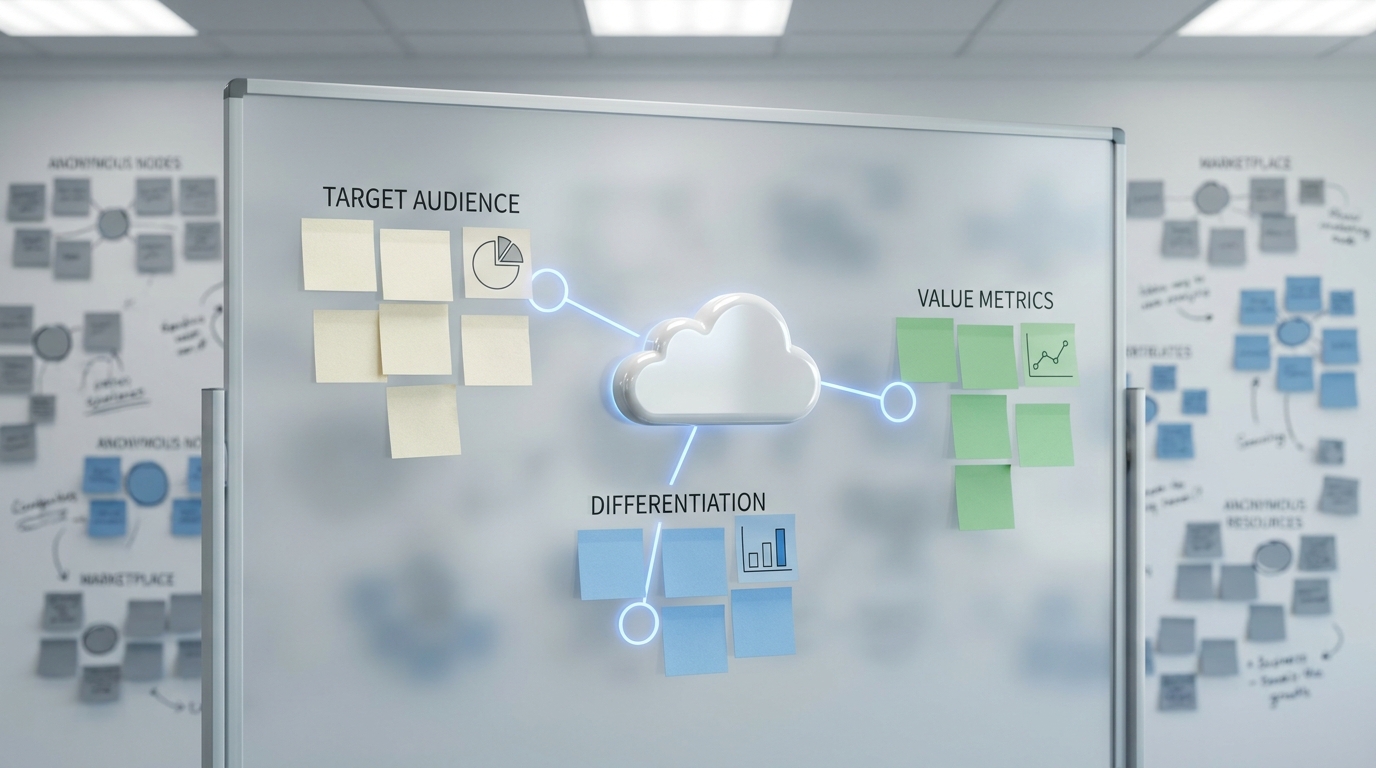
- Interview fast-moving customers, lost deals, and active prospects. You need all three views.
- Ask what triggered the search, what alternatives they considered, what made them trust one option, and what would have made switching feel too risky.
- Rank the buying criteria you hear most often, then cut the list down to the top two or three that truly matter for your ICP.
Success indicator: you can finish the sentence, “For this buyer, the real decision comes down to…” If you cannot, you are still too close to your own product and not close enough to the market.
Step 3: Map alternatives, not just competitors
Step 3 → Compare against every real alternative → You find a wedge buyers will recognize
One of the biggest positioning mistakes I see is building the whole story around one named competitor. In reality, your product is usually being judged against five things at once: a direct rival, a horizontal platform, a spreadsheet workflow, an internal tool, and the option to wait six months.
- Create a simple grid with the top buying criteria from Step 2 across the top.
- Add direct competitors, legacy tools, manual workarounds, in-house builds, and “status quo” down the side.
- Score each option honestly and look for places where your product is meaningfully stronger for your ICP.
The breakthrough here is usually context. You do not need to be better for everyone. You need to be clearly better for a specific use case, team maturity, compliance requirement, or implementation constraint. That is where crowded categories start to feel a lot less crowded.
Step 4: Choose one wedge buyers will pay for
Step 4 → Pick a segment, use case, outcome, or constraint wedge → Your differentiation becomes economically meaningful
In practice, most strong SaaS positioning comes from one of four angles:
- Segment-based: built for a specific team, company type, or operating model
- Use-case-based: best for one critical workflow
- Outcome-based: tied to a measurable result the buyer cares about
- Constraint-based: designed for a buying limitation others handle poorly, like security, speed, budget, or implementation complexity
- List the strongest candidate wedges that emerged from your research.
- Pressure-test each one by asking whether it is easy to understand, easy to prove, and valuable enough to change buying behavior.
- Choose the wedge that creates the shortest path from problem to proof to purchase.
My rule of thumb: if the wedge sounds clever internally but would take three slides to explain, it is probably too weak. The best positioning angle makes a buyer say, “Yes, that is exactly our situation.”
Important: only try to create a new category if the existing category actively hurts understanding. I have seen teams burn months inventing labels when they really just needed a sharper wedge inside a category buyers already understood.

Step 5: Turn the wedge into a positioning statement the whole team can repeat
Step 5 → Translate the wedge into a crisp message → Sales, product, and marketing finally tell the same story
This is where the research becomes usable. I like a simple structure because complicated frameworks often collapse in real GTM work:
For [ICP], who [pain], our product is a [category] that [outcome]. Unlike [main alternative], we [differentiator].
- Write the first draft in plain language, not brand language.
- Replace vague words like “transform,” “streamline,” or “empower” with specific outcomes like “cut reconciliation time” or “reduce implementation effort.”
- Test the statement with sales calls, not just internal stakeholders.
Here is the kind of specificity that works: “For RevOps teams at mid-market SaaS companies who spend hours reconciling pipeline data, our product is a forecasting layer that gives leadership a reliable weekly view of commit risk. Unlike spreadsheet-based workflows, it holds up even when data ownership is messy.”
You’ll know it worked when reps stop improvising and start repeating the same language because it closes the understanding gap faster.
Step 6: Build proof before you scale the message
Step 6 → Pair your message with customer evidence → Your positioning becomes believable instead of aspirational
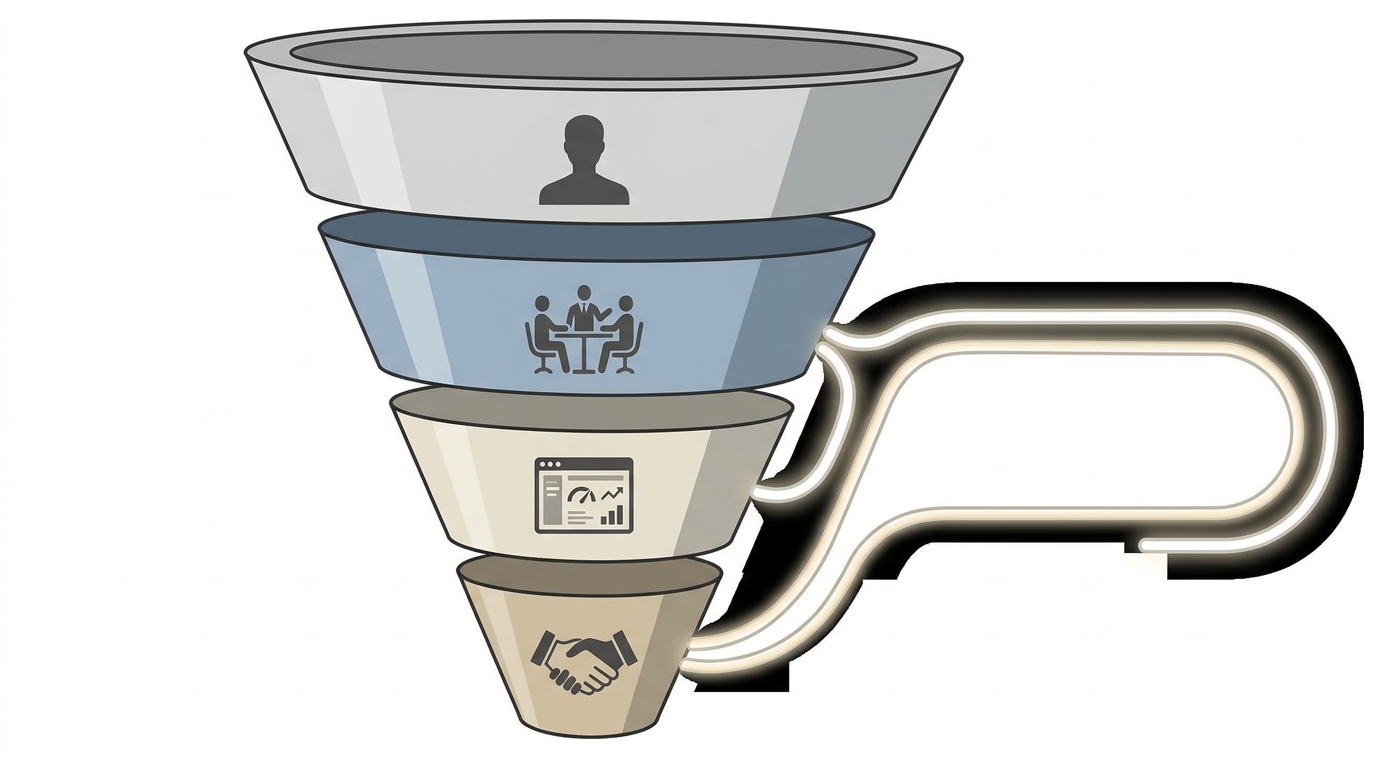
I have seen teams roll out beautiful messaging that fell apart in live deals because there was nothing behind it. In crowded categories, proof matters more than poetry.
- Collect three to five customer stories that match your chosen ICP and wedge.
- Turn at least one or two into quantified case studies with before-and-after detail.
- Arm sales with customer quotes, objection handling, and one comparison page focused on your wedge.
The strongest proof is not a polished logo wall. It is a story that shows the trigger event, why the old approach failed, why the buyer switched, and what measurable outcome improved.
Step 7: Roll the positioning out across every touchpoint
Step 7 → Align website, sales, demos, and content → The market hears one clear story instead of five conflicting ones
This is the part teams underestimate. A clear positioning strategy can still fail if the homepage speaks to everyone, paid campaigns chase generic traffic, and the demo goes straight into features with no problem framing.
- Update the homepage hero, subhead, and primary proof points first.
- Rewrite the sales deck and demo script around the same problem, wedge, and outcome.
- Align content, outbound, comparison pages, and enablement so every asset reinforces the same message.
Pro tip: if you serve multiple segments, keep one primary company-level position and create segment-specific pages underneath it. That is much cleaner than trying to cram three ICPs into one homepage.
Troubleshooting common positioning problems
- “Our message still sounds generic.” Go back and narrow the ICP or the use case. Generic positioning usually means the audience is still too broad.
- “Customers like the product, but they do not remember the story.” Simplify the wedge and lead with problem language, not product language.
- “Sales keeps asking for different messaging.” Separate true segment differences from random deal-by-deal objections. Most teams need better proof, not a totally new position.
- “We are not clearly better on features.” Win on fit, speed, implementation, trust, or operational context. Feature breadth is not the only path to differentiation.
- “Our category is too crowded to stand out.” Then stop trying to be broadly superior. Be obviously better for one high-value situation.
Advanced tips that save time later
- Treat “AI” as an ingredient, not the position. Buyers care about the workflow improvement and business outcome, not the label.
- Write for the buying committee, but anchor on one champion. Messaging collapses when it tries to satisfy everyone equally.
- Look for the unusual buying constraint you handle well. Sometimes your best wedge is not a feature at all; it is faster deployment, lower change management, stronger auditability, or cleaner ownership.
- Do win-loss interviews every quarter. Positioning drifts faster than most teams realize, especially in fast-moving software categories.
TL;DR
Step 1 → Choose one beachhead ICP → You stop sounding like every other vendorStep 2 → Learn the real buying criteria and trigger events → You position around decisions, not featuresStep 3 → Map all alternatives, including status quo → You find a believable wedgeStep 4 → Pick one segment, use case, outcome, or constraint angle → Your differentiation becomes valuableStep 5 → Write a clear positioning statement → Your team can repeat it consistentlyStep 6 → Back it with proof → Buyers trust the storyStep 7 → Roll it out everywhere → The market hears one message, not five
If I could leave you with one lesson, it is this: in a crowded category, the goal is not to sound bigger. It is to sound more relevant, more credible, and easier to buy for the right customer. That is what positioning is really for, and once you get that right, everything downstream gets simpler.
Find the channels buyers already trust before competitors own them.
We map your acquisition channels, visibility gaps and distribution constraints, then show where market presence can compound into qualified demand.