Remote Selling Made Travel Optional, Not Unnecessary for SaaS Deals
 Julia
Julia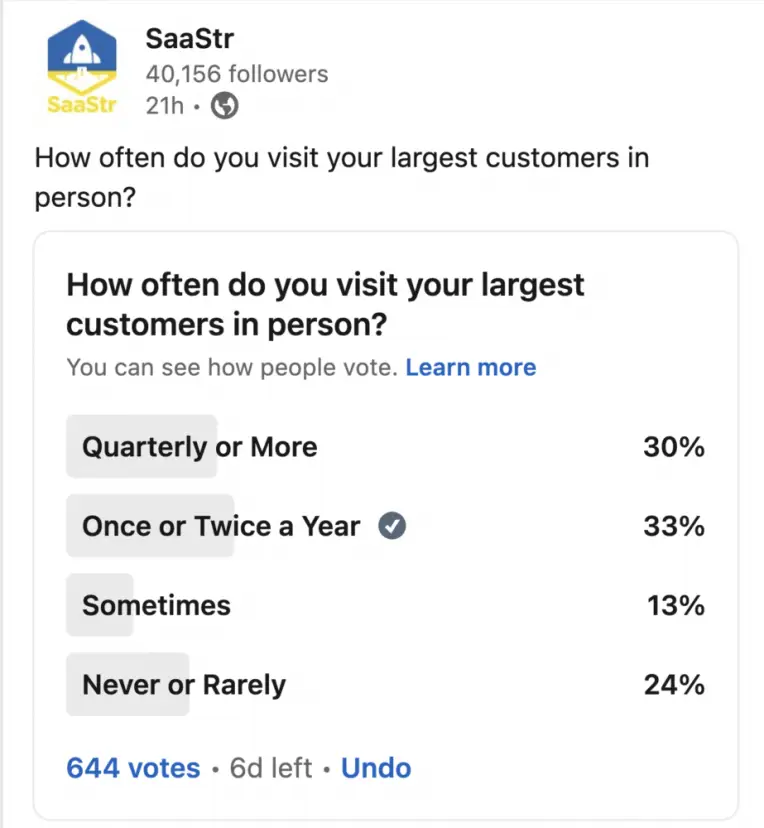
At Codolie, we care about this because too many companies have confused a cheaper sales motion with a stronger one. Zoom, Gong, Salesloft, and the rest of the remote-sales stack made it possible to run a serious pipeline without leaving the office. That was a genuine operational breakthrough. It also created a lazy conclusion: if a deal can close remotely, travel must be unnecessary.
That conclusion is wrong for the deals that matter most.
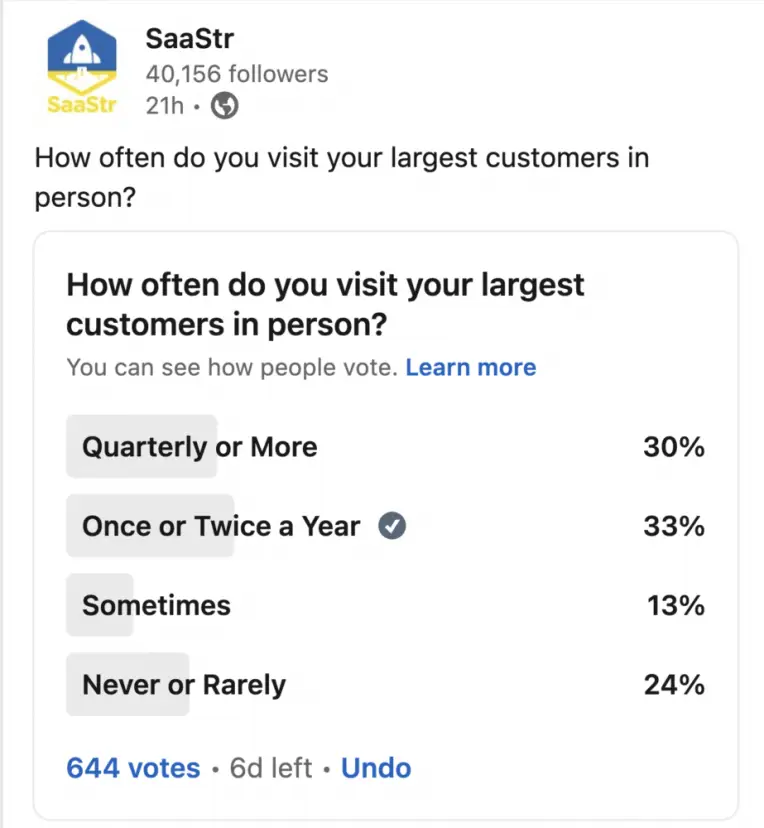
Remote selling should remain the default for efficiency. It is fast, scalable, measurable, and indispensable for keeping a distributed go-to-market motion moving. But competitive SaaS deals above $20,000 deserve an in-person visit. High-value opportunities with multiple stakeholders deserve one even more. Not because flights are impressive, and not because a dinner is a substitute for product value, but because enterprise buying is still a human process of trust, consensus, risk reduction, and internal politics.
Get practical tips to manage marketing without adding noise.
Short field notes on positioning, distribution and turning expertise into demand. Written for founders and operators, not marketers chasing trends.
Companies that treat in-person selling as outdated are not becoming modern. They are voluntarily giving up one of the few advantages that remote-first competitors may refuse to use. In a competitive deal, that is an expensive kind of convenience.
The Zoom-First Sales Model Is Efficient, but It Is Not Complete
Our position is simple: build a remote-first sales system, then use in-person meetings selectively where they can change the outcome. Do not send teams on aimless travel. Do not turn field meetings into a status symbol. Do not pretend every prospect needs a visit. But do not leave a meaningful competitive deal entirely inside a webcam frame simply because the calendar link worked.
The performance gap is too large to dismiss. In-person sales can generate three times higher conversions than virtual sales. For new prospects, face-to-face meetings are 85% more effective than phone, video, or chat interactions. Even with existing customers, the advantage remains substantial at 65%. In industrial sales, in-person meetings can close at roughly 40%, while an in-person request is 34 times more likely to succeed than an email request.
Those numbers do not mean every sales rep should spend Monday through Thursday in airport terminals. They mean leadership should stop treating travel as a cost line in isolation. The relevant question is not whether a visit costs money. The relevant question is whether being present materially improves the odds of winning, expanding, or retaining an account worth protecting.
Key Takeaways
- Use remote selling for coverage and speed. Zoom and sales-engagement tools should handle the high-volume work of pipeline creation, follow-up, and routine progression.
- Show up for any competitive SaaS deal above $20,000. When a prospect is actively comparing vendors, in-person access is a practical win-rate lever.
- Let the buyer own the first 15 minutes. Strong field meetings begin with the buyer’s current situation, pain points, and failed attempts-not a polished company presentation.
- Treat customer success visits as part of the sale. If the sales team cannot attend the larger deal in person, arrange a customer-success visit within the first 30 days after closing.
Travel Is Not a Perk. It Is a Competitive-Deal Tool.
The worst version of field sales is travel theatre: expensive trips with vague goals, a generic presentation, a restaurant receipt, and no measurable change in deal momentum. That is not what we are defending. It deserves to be cut.
The better version is deliberate. A company decides that a deal has crossed a threshold where the relationship, the level of competition, the number of stakeholders, or the customer’s strategic importance justifies physical presence. Then it sends the right people with a clear objective: deepen discovery, uncover the real decision process, resolve risk, build consensus, and create a working relationship before the contract makes that relationship mandatory.
That is why the practical rule is so useful: show up in person for any $20,000-plus competitive deal. The point is not that $20,000 magically changes a buyer’s psychology. The point is that every company needs a rule strong enough to prevent revenue teams from defaulting to convenience at precisely the point where a deal becomes important.
A competitive deal is not merely a comparison of features and pricing pages. It is a contest over confidence. The buyer is deciding which vendor will be responsive when implementation becomes difficult, which team understands the underlying problem, which company can handle executive scrutiny, and which relationship will be least risky to defend internally.
A video call can communicate competence. An in-person meeting can reveal commitment. That distinction matters when a buyer is choosing between products that look broadly similar in a spreadsheet.
The First 15 Minutes Should Not Belong to the Sales Deck
The strongest field-selling advantage is not the handshake. It is better discovery.
Too many sales meetings begin with the seller trying to earn the right to speak through a company overview. That approach is weak on Zoom and even worse in person. When a prospect has committed time, opened an office door, and assembled stakeholders, the first 15 minutes belong entirely to the buyer.
Ask about the current situation. Ask where the operating friction sits. Ask what has already been attempted. Ask what happened when those attempts failed. Then listen without interrupting and take notes visibly.
Visible note-taking is not a performance. It signals that the buyer’s operating reality-not the seller’s demo sequence-is shaping the conversation. That creates a very different meeting. The rep is no longer forcing a product into a generic pitch. The rep is gathering the information needed to connect product value to the customer’s real risk, urgency, and internal constraints.
For high-ticket SaaS deals in the $100,000 to $500,000-plus annual recurring revenue range, this matters even more. Large purchases are rarely decided by a single enthusiastic user. They move through a deeply human process of enterprise consensus. Different people care about different failure modes. Finance may care about commercial risk. Operations may care about implementation. A functional leader may care about adoption. The executive sponsor may care about visibility and accountability.
In person, a capable team can read the room, notice hesitation, understand who carries influence, and adjust the discussion before uncertainty hardens into resistance. That is not mystical sales craft. It is a practical advantage in a buying process where the decision is distributed across people with different incentives.
Remote Tools Should Create the Meeting, Not Replace the Relationship
None of this is an argument against remote selling. The remote stack is essential because it creates reach, speed, and repeatability. Distribution beats content, and in sales, distribution means the ability to contact, follow up with, and remain useful to far more prospects than a field team could ever visit.
The mistake is treating remote activity as the complete system instead of the top of the system. Zoom calls, Gong recordings, Salesloft sequences, LinkedIn outreach, and structured video follow-ups should help teams identify the right accounts, advance early discovery, and determine where human presence can have disproportionate impact.
Webcam use itself remains a meaningful signal. Closed deals involve webcam usage 41% more often than lost deals. That does not mean turning a camera on closes a contract. It means buyers respond differently when the people on the other side are more present, more legible, and more accountable than a disembodied voice or a wall of text.
The same principle applies after a meeting. A generic “great speaking today” email is not a sales system. It is administrative debris. Video follow-ups with a structured format, a clear next step, and embedded resources can help a deal move faster and survive internal forwarding better than plain text alone. Vidyard’s Chrome Extension is useful here because it lets a rep record a follow-up video without leaving the tool already in use.
Speed matters as much as format. In B2B sales, a follow-up delay of five minutes can reduce conversion rates by as much as eight times. That should change how leaders think about post-meeting workflow. A strong in-person meeting followed by a slow, vague response is wasted momentum. A strong meeting followed by a useful video recap, a clear call to action, and immediate resources gives the buyer something they can circulate internally while the conversation is still fresh.
Build a Field-Sales Threshold, Not a Travel Culture
The operational answer is not “travel more.” That instruction is too vague to survive budget review or calendar pressure. The answer is to define when a visit becomes mandatory, when it is optional, and when remote is enough.
- Competitive deals above $20,000: Put an in-person meeting into the account plan. A competitor is already creating a comparison. Physical presence can change the quality of the relationship inside that comparison.
- High-ticket, multi-stakeholder opportunities: Use the visit to improve discovery and map consensus. The value is in understanding the buying process, not simply delivering a better pitch.
- Large deals where a sales visit is not possible: Schedule a customer-success visit within the first 30 days after closing. The relationship should not begin only after the buyer has already formed an implementation opinion.
- Routine, low-value, non-competitive activity: Keep it remote. Field capacity is scarce and should be directed toward opportunities where presence can change the economics.
This is how systems outperform manual effort. The company does not rely on a rep’s instinct, an executive’s willingness to travel, or a last-minute scramble when a competitor appears. It operationalizes the moments where face-to-face contact has the highest expected return.
It also makes accountability clearer. Sales leaders can inspect whether qualifying deals received a visit, whether the right stakeholders attended, whether discovery produced new information, whether follow-up occurred quickly, and whether customer success appeared early enough to protect the relationship after signature.
The Real Asset Is Not the Flight. It Is the Relationship Depth.
The remote-only argument usually focuses on cost. Flights cost money. Hotels cost money. Time out of the office costs money. All true. But a lost competitive deal has a cost as well. A fragile early customer relationship has a cost. A renewal that weakens because the customer never developed confidence in the people behind the software has a cost.
Authority is an asset, and sales authority is built through evidence of competence, responsiveness, and proximity to the customer’s actual problem. An in-person meeting does not manufacture authority. It exposes whether a company has earned it. When the team shows up prepared, listens well, understands the operating context, and follows through immediately, the buyer has a much stronger reason to believe the company will perform after the contract is signed.
That is also why customer success belongs in this conversation. Revenue is not only created at close. Retention, expansion, and referenceability depend on what happens immediately after. If sales cannot make the trip for a larger opportunity, a customer-success visit within the first 30 days is not a consolation prize. It is a way to establish relationship depth before implementation friction gets the first word.
Discovery is a business function. So is relationship design. Companies that understand both will use remote tools for scale and in-person meetings for leverage. Companies that reject either side will create a fragile growth motion: either expensive and unscalable, or efficient but shallow.
TL;DR
Remote selling has earned its place. It should power coverage, follow-up, qualification, and day-to-day deal progression. But it should not become an excuse to avoid the meetings that can materially change a competitive outcome.
For competitive SaaS deals above $20,000, show up. For high-ticket, multi-stakeholder opportunities, use the meeting to uncover the real buying process and build consensus. Give the first 15 minutes to the buyer. Follow up immediately with structured video, resources, and a clear next step. If sales cannot attend a larger deal in person, send customer success within the first 30 days.
The winning model is not remote versus in person. It is remote for distribution and in person for decisive moments. That is how a sales organization turns convenience into a system without sacrificing the relationships that still decide the biggest deals.
Find the channels buyers already trust before competitors own them.
We map your acquisition channels, visibility gaps and distribution constraints, then show where market presence can compound into qualified demand.